
Slow tourism
Why bet on slow tourism in 2025?
Today, tourism is no longer just about wanting to visit a place. It's about living an authentic experience, respectful of the environment and in harmony with the territory.
This is what slow tourism offers, a trend that is becoming increasingly prevalent in 2025.
But what exactly is slow tourism, and why should it become an essential choice, especially for professionals in the sector?
Let's dive together into this new way of traveling, slower, more thoughtful, and above all more responsible.
What is Slow Tourism?
Slow tourism, or slow travel, is primarily a philosophy of travel.
Unlike conventional tourism which prioritizes speed, quantity, and must-see locations, slow tourism encourages slowing down the pace, taking the time to appreciate each moment, and fully immersing oneself in the local environment.
This involves longer stays in one place, exploring off the beaten path, using gentle modes of transportation (bicycle, train, walking), and most importantly, choosing accommodations that respect nature.
By 2025, this approach increasingly appeals to travelers who are aware of the ecological stakes and eager to have a positive impact on the territories they visit.
Indeed, slow tourism is inseparable from sustainable tourism and responsible tourism: it seeks to preserve landscapes, support the local economy, and reduce resource wastage.
Why has slow tourism become essential?
Several reasons explain the enthusiasm around slow tourism:
An increased ecological awareness: travelers want to reduce their carbon footprint, avoid mass tourism that degrades natural spaces, and favor greener stays.
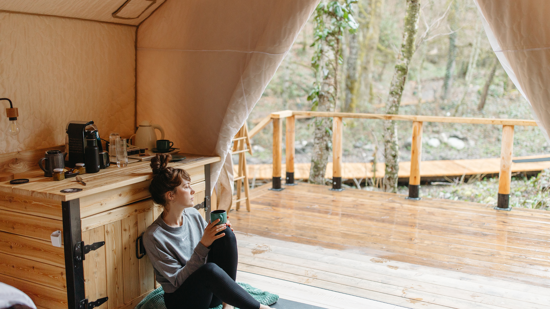
The need for disconnection and well-being: in the digital age, people are looking for moments of calm, to recharge, often in natural environments.
The desire for authenticity: rather than skimming over a place, people want to immerse themselves in local culture, understand traditions, taste local products.
A positive impact on the local economy: by choosing local accommodations and activities, people favor short supply chains, support artisans and producers, and contribute to the vitality of the territories.
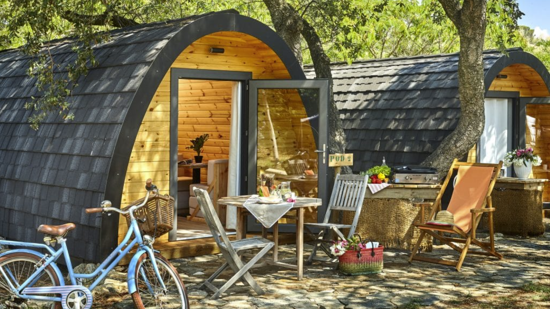
These expectations translate into more specific choices, especially in terms of accommodation. Slow tourism goes hand in hand with ecological lodgings, often made of natural wood, built with respect for the environment.
Quality
Ecology
Authenticity
Log out
Why opt for slow tourism as a professional in the sector?
Slow tourism is not just a passing trend. It’s a new way of conceiving travel, more sustainable, more responsible, and above all, more in tune with the current expectations of travelers.
For tourism professionals, it’s a real opportunity to reinvent themselves while giving meaning to their activity.
Meeting the new expectations of travelers
Today, more and more people are looking to slow down, to escape differently. They are shunning classic stays in favor of more authentic experiences, close to nature and local. By offering a slow tourism-oriented service, you are addressing a clientele in search of meaning, calm, and quality.
Stand out with a unique offer
In a highly competitive market, betting on eco-designed accommodations, in natural wood, well integrated into their environment, allows for clear differentiation. It's also a way to tell a story, to propose a universe with a real personality.
Encourage tourism that is more respectful of territories
Slow tourism values short circuits, local know-how, and encourages a form of tourism on a human scale. This helps to preserve landscapes, limit overtourism, and support local economies.
Create a memorable customer experience
An accommodation that invites disconnection, a soothing atmosphere, a strong connection with nature... These are all elements that leave a lasting impression. The result: more satisfied visitors, more engaged, who do not hesitate to return… or to recommend.
Get ahead of upcoming evolutions
Environmental regulations are getting stronger every year. Adopting an eco-responsible approach now is to anticipate the future and make a sustainable strategic choice. It also shows your clients that you are an actor of change, and not just a spectator.
In conclusion
Adopting slow tourism is much more than just a choice of accommodation or destination: it’s a comprehensive approach that addresses current challenges, both ecological and human.
For professionals in the field, it’s an opportunity to offer a more committed, more sustainable, and especially more aligned offering with the expectations of an increasingly aware clientele. Investing in environmentally friendly accommodations, promoting authentic experiences, is also about building a softer and more responsible tourism for tomorrow.
With us, this philosophy guides each of our choices.
Through accommodations designed to last, to inspire, and to reconnect, we contribute on our scale to this transition. Slow tourism is not a constraint: it’s a great opportunity to rethink our way of traveling… and of making others travel.